The Strategic Value of Elegant Romance Card Design in Modern Visual Communication
In an era dominated by ephemeral digital interactions and algorithmic content feeds, the tangible artifact has reclaimed its status as a premium communication tool. For professionals, marketers, and creative entrepreneurs, understanding the nuances of specific aesthetic categories is no longer merely an artistic exercise; it is a strategic business imperative. Among these categories, Elegant Romance Card Design has emerged as a pivotal visual language that transcends traditional greeting cards to influence branding, packaging, and high-end digital experiences. This design philosophy, characterized by its sophisticated integration of organic motifs and refined typography, represents a convergence of nostalgia, luxury, and modern vector technology.
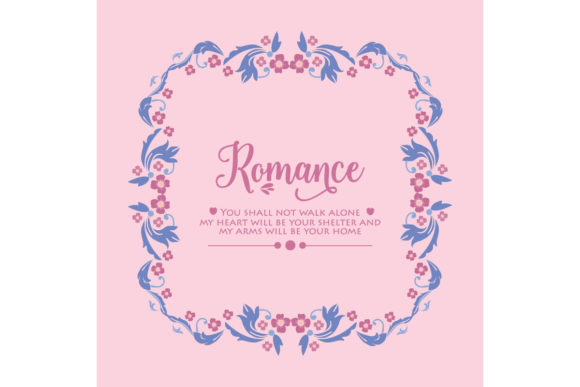
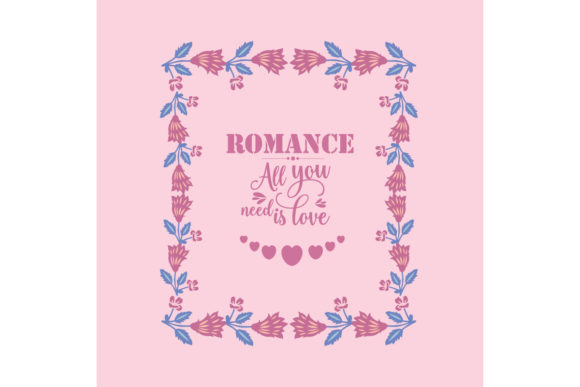
When we discuss this specific design archetype, we are referring to a distinct visual system. It is defined by the harmonious balance of delicate botanical elements—specifically the elegant pattern of leaf and pink floral frame—paired with ample negative space and curated color palettes. Unlike generic romantic imagery, this style prioritizes structure and refinement over sentimentality. It serves as a bridge between classical ornamentation and contemporary minimalism, making it uniquely suited for today’s hybrid market where consumers crave both authenticity and polish.
Redefining Intimacy Through Vector Illustration
The technical foundation of modern Elegant Romance Card Design lies in the mastery of vector illustration. Historically, achieving the intricate detail of a pink floral frame or the organic flow of vine work required labor-intensive hand painting or raster-based editing that degraded upon resizing. Today, vector graphics have democratized access to high-fidelity romance aesthetics while solving critical production challenges for businesses.
For freelancers and agency designers, vectors offer infinite scalability without loss of quality. A single master file containing an elegant pattern of leaf and pink floral frame can be adapted for a 5x7 invitation, a large-format retail display, or a responsive web header without pixelation. This technical versatility aligns perfectly with current omnichannel marketing strategies. Brands can maintain visual consistency across physical touchpoints and digital platforms, ensuring that the emotional resonance of the design remains intact regardless of the medium.
Furthermore, the precision of vector art allows for modular design systems. Creators can deconstruct a complex floral frame into individual components—stems, buds, leaves, and petals—that can be reassembled dynamically. This modularity supports agile workflows, enabling rapid iteration and customization for diverse client needs while maintaining a cohesive aesthetic identity. In a marketplace that demands speed without sacrificing beauty, this technical capability is a significant competitive advantage.
Market Trends: The Return to Tactile Luxury
The resurgence of Elegant Romance Card Design is not occurring in a vacuum; it is a direct response to broader shifts in consumer psychology and market dynamics. We are currently witnessing a "digital fatigue" that has recalibrated how audiences perceive value. In a landscape saturated with flat design and corporate memphis styles, the intricate detail of botanical romance signals craftsmanship and intentionality.
This trend is particularly visible in the wedding and events industry, but its implications extend far beyond. Luxury skincare brands, boutique hospitality providers, and artisanal food producers are increasingly adopting these visual codes to signal quality. The elegant pattern of leaf and pink floral frame acts as a semiotic shorthand for "natural," "gentle," and "premium." When a consumer encounters this aesthetic on packaging or stationery, they subconsciously associate the product with care and heritage, distinguishing it from mass-produced alternatives.
Moreover, the definition of "romance" in design has expanded. It is no longer exclusively tied to courtship or Valentine’s Day. Modern Elegant Romance Card Design is being utilized for self-care rituals, wellness branding, and female-focused entrepreneurship. The softness of the pink floral palette combined with the strength of structured vector lines mirrors the contemporary narrative of empowered femininity and holistic well-being. Marketers who understand this semantic shift can leverage these designs to connect with audiences on a deeper emotional level, moving beyond transactional relationships to build brand affinity rooted in shared values.
Workflow Integration for Creators and Entrepreneurs
For the practical creator, integrating Elegant Romance Card Design into a commercial workflow requires more than just downloading assets; it demands a thoughtful approach to composition and hierarchy. The challenge with ornate vector illustrations is avoiding visual clutter. The elegance in this style is derived as much from what is left out as what is included.
- Hierarchy Management: Use the floral frame as a guiding element rather than a border. Allow the vector leaves to direct the viewer’s eye toward the focal point, such as a logo or headline, rather than enclosing the content rigidly.
- Color Psychology: While pink is foundational, sophisticated applications often mute the saturation or pair it with unexpected accents like sage green, charcoal, or metallic gold. This prevents the design from appearing juvenile and anchors it in adult sophistication.
- Typography Pairing: The organic curves of a leaf pattern demand typographic contrast. High-contrast serifs or clean geometric sans-serifs often work better than matching script fonts, which can make the overall composition feel overly decorative and difficult to read.
- Texture Overlay: Pure vector art can sometimes feel sterile. Professional designers frequently overlay subtle paper textures or grain to add warmth and tactile realism, bridging the gap between digital perfection and physical expectation.
These practical considerations highlight why this design style remains relevant for professionals. It requires skill to execute well, creating a barrier to entry that protects the value of high-quality design services. For entrepreneurs using template-based tools, understanding these principles ensures that their DIY efforts still meet professional standards of visual communication.
The Future of Botanical Aesthetics in Business
Looking forward, the trajectory of Elegant Romance Card Design suggests continued evolution rather than obsolescence. As artificial intelligence and generative design tools become more prevalent, the human curation of specific aesthetic styles becomes even more valuable. AI can generate endless variations of floral patterns, but it lacks the cultural context to understand why a specific arrangement of pink peonies and eucalyptus leaves resonates with a target demographic in a specific moment.
We are also seeing a fusion of this aesthetic with sustainability narratives. The "leaf" component of the elegant pattern is increasingly interpreted through the lens of eco-consciousness. Brands are using these designs not just for beauty, but to communicate biophilic values and environmental responsibility. When printed on recycled stock or used in digital-first campaigns to reduce waste, Elegant Romance Card Design becomes a vehicle for ethical storytelling.
Additionally, the personalization economy is driving demand for adaptable vector assets. Consumers expect products and communications tailored to their specific identities. The modular nature of vector floral frames allows for mass customization at scale. A stationery company can offer hundreds of unique variations of a single Elegant Romance Card Design by programmatically adjusting colors, densities, and arrangements, satisfying the desire for individuality without prohibitive custom design costs.
Cultivating Emotional Resonance in a Data-Driven World
Ultimately, the enduring relevance of Elegant Romance Card Design lies in its ability to humanize business. In a professional landscape obsessed with metrics, conversion rates, and optimization, there is a profound need for visuals that speak to the softer aspects of the human experience. This design style offers a sanctioned way for corporations and creators to express empathy, celebration, and beauty.
For marketers, this means recognizing that aesthetics are functional. An elegant pattern of leaf and pink floral frame is not merely decoration; it is a user interface element that sets expectations and modulates emotional response. For designers, it represents a discipline that balances technical precision with artistic sensitivity. And for entrepreneurs, it provides a timeless visual vocabulary that can elevate a brand above the noise of the temporary.
As we navigate an increasingly complex technological landscape, the principles embodied in Elegant Romance Card Design—clarity, beauty, intentionality, and connection—serve as essential anchors. Whether rendered in ink on cotton paper or pixels on a retina display, this style reminds us that even in commerce and creation, there is always room for grace. By mastering this aesthetic, professionals do not just make things look better; they make communication feel more meaningful, securing their relevance in a market that increasingly values the authentic over the artificial.