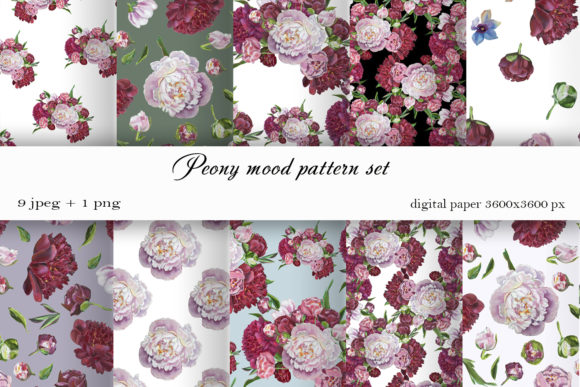
Pink Flower Digital Paper: Evaluating Peony Patterns for Creative Projects
Selecting the right background asset is often the most critical decision in digital surface design. When researching floral resources, creators frequently encounter a wide spectrum of options ranging from vintage botanical illustrations to modern vector art. Pink Flower Digital Paper featuring peonies occupies a specific niche within this landscape, bridging the gap between traditional romantic aesthetics and contemporary digital utility. Unlike generic floral packs that may rely on low-resolution stock photography or rigid vector shapes, high-quality peony digital paper is distinguished by its painterly texture and seamless tiling capability. For designers, crafters, and print-on-demand sellers, understanding the technical specifications and practical applications of these assets is essential for determining whether they fit specific project requirements compared to alternative pattern styles.
Distinguishing Characteristics of Peony Digital Assets
The primary differentiator of Pink Flower Digital Paper centered on peonies is the balance between organic realism and graphic repeatability. Peonies are inherently complex flowers with dense petal structures and soft color gradients. In digital format, this complexity serves as a natural test of quality. Lower-tier alternatives often simplify these details into flat shapes or suffer from pixelation when scaled. A robust peony collection maintains the integrity of the brushwork and color blending even at high magnification.
Furthermore, the distinction lies in the seamlessness of the tile. Many floral resources found on general marketplaces are single images that require significant post-processing to create a repeating pattern. This process can introduce visible grid lines or mismatched color values at the edges. Dedicated digital paper collections are engineered as true seamless tiles. This means the 12x12 inch canvas wraps perfectly, allowing users to fill large areas—such as wallpaper or fabric bolts—without manual editing. When comparing options, verifying that a product is marketed specifically as "seamless digital paper" rather than just "floral clipart" saves considerable production time and ensures professional results in large-format printing.
Technical Specifications and Print Readiness
For professionals evaluating digital assets, resolution is non-negotiable. The standard for this category of Pink Flower Digital Paper involves files sized at 12 x 12 inches with dimensions of 3600x3600 pixels. This equates to 300 DPI (dots per inch), which is the industry benchmark for commercial and home printing. When comparing this to web-optimized graphics (typically 72 DPI) or mid-range stock photos, the difference in output quality is substantial. At 300 DPI, the pink and white peony patterns retain crisp edges and smooth color transitions when printed on physical media like cardstock, cotton fabric, or vinyl.
A comprehensive collection typically includes two distinct file formats to address different workflow needs:
- JPEG Files: Usually comprising the bulk of the collection (e.g., 9 patterns), these are flattened, RGB-color-space images optimized for immediate use. They offer smaller file sizes and universal compatibility with all image processing programs, making them ideal for digital planning, web backgrounds, and standard photo printing.
- PNG Files: Often included as a bonus or specialized asset (e.g., 1 pattern), PNGs support transparency and lossless compression. While larger in file size, they are superior for layering. If a designer wishes to change the background color behind the pink peonies or overlay the pattern onto a textured surface without a white box appearing, the PNG format is the necessary choice.
Comparative Analysis: Peonies vs. Alternative Floral Styles
When choosing digital paper, it is helpful to weigh peony patterns against other popular floral categories to ensure aesthetic alignment with the project's goal.
Peonies vs. Tropical and Modern Botanicals
Tropical patterns featuring monstera leaves or hibiscus tend to have high contrast and bold, saturated colors. These are excellent for summer-themed merchandise or energetic branding. In contrast, pink and white peony digital paper offers a softer, more diffused palette. The visual weight of peonies is lighter and more intricate. For projects requiring elegance, such as wedding stationery, baby shower invitations, or luxury packaging, peonies generally outperform tropical alternatives. However, if the objective is high-visibility signage or athletic wear, the subtlety of peonies may lack the necessary impact.
Seamless Digital Paper vs. Individual Clipart
A common point of confusion is the difference between digital paper and floral clipart bundles. Clipart consists of individual elements with transparent backgrounds, intended for composition. Digital paper is a pre-composed, balanced layout. While clipart offers maximum flexibility for building custom scenes, it requires design skills to achieve a balanced, non-repetitive look across a large surface. Pink Flower Digital Paper eliminates the composition phase. For users creating wallpaper, wrapping paper, or fabric yardage, seamless paper is significantly more efficient. Conversely, if the user only needs a single flower accent for a logo or a small badge, purchasing a full digital paper set may be unnecessary overhead compared to a targeted clipart pack.
Raster Paintings vs. Vector Patterns
Vector floral patterns are infinitely scalable and editable, allowing users to change individual petal colors easily. However, vectors can sometimes appear sterile or overly geometric. Pink Flower Digital Paper in the peony style is typically raster-based, derived from original paintings or high-end digital illustration. This provides a tactile, artistic quality that vectors struggle to replicate. The tradeoff is editability; while you cannot easily move a single petal in a JPEG digital paper, the emotional resonance and textural depth are often higher. For heritage brands, artisanal products, or romantic themes, the raster aesthetic usually aligns better with audience expectations than clean vector lines.
Practical Applications and Use Case Evaluation
The versatility of pink and white peony patterns extends across both digital and physical mediums. Understanding where these assets perform best helps in maximizing return on investment.
Stationery and Paper Goods
This is the most traditional application. The 12x12 inch tile size aligns perfectly with standard scrapbooking paper dimensions. Beyond scrapbooking, these patterns serve as foundational layers for greeting cards and invitations. Because the resolution is 300 DPI, designers can scale the pattern down for business cards or up for poster-sized event signage without losing clarity. The soft pink and white palette is particularly effective for bridal showers, Mother’s Day cards, and spring-themed planners, where the background must enhance readability rather than compete with typography.
Textile and Surface Design
For creators in the print-on-demand space, seamless peony digital paper is a viable asset for apparel and home decor. The repeating nature of the file allows it to be applied to t-shirts, baby clothes, and tote bags as an allover print. When evaluating this use case, consider the base material. Pink and white florals render beautifully on white or cream fabrics but may lose vibrancy on dark textiles unless the file is modified. Additionally, for home decor items like throw pillows or curtains, the 12-inch repeat creates a medium-scale pattern that feels proportional to furniture. Larger repeats might overwhelm small accessories, while smaller repeats might look busy on large upholstery.
Digital Planning and Content Creation
In the realm of digital products, these papers function as backgrounds for digital planners, journal templates, and social media graphics. Here, the JPEG format is preferred due to faster loading times. Users should note that while 300 DPI is excellent for print, digital screens display at lower resolutions. Designers may need to resize the 3600x3600 pixel files down to 1080px or 2048px for optimal screen performance and file management. Despite this extra step, starting with the high-resolution master ensures future-proofing; a file created for Instagram today can be repurposed for a printed magazine spread tomorrow without needing to source a new asset.
Decision Factors: When to Choose and When to Pass
Evaluating Pink Flower Digital Paper requires an honest assessment of project constraints. This resource is an optimal choice when:
- Print Quality is Paramount: You intend to produce physical goods and require 300 DPI assurance.
- Time Efficiency Matters: You need a ready-to-use, seamless background rather than spending hours arranging individual elements.
- Aesthetic Alignment Exists: The project calls for romance, softness, tradition, or organic beauty.
- Versatility is Needed: You want a single asset pack that covers both paper crafting and digital design.
Conversely, readers should explore alternatives if:
- Total Editability is Required: You need to recolor specific flowers or adjust spacing dynamically; vector assets or layered PSDs would be superior.
- Dark Backgrounds are Essential: Standard pink/white peony papers are designed for light bases. Unless a dark-mode variant is included, significant editing is required for black or navy backgrounds.
- Large-Scale Murals are the Goal: While 300 DPI at 12 inches is excellent, scaling a raster pattern to cover an entire wall may reveal pixelation. Vector art or specialized mural files are safer for massive architectural applications.
- Minimalist or Corporate Tone: The inherent ornateness of peonies may clash with strict minimalist branding or corporate identities requiring geometric precision.
Final Considerations for Asset Selection
Ultimately, the value of Pink Flower Digital Paper lies in its dual role as a creative shortcut and a professional-grade resource. By providing high-resolution JPEGs for immediate application and PNGs for flexible customization, a well-curated peony collection addresses the majority of surface design needs. When comparing options, prioritize technical specs and seamlessness over sheer quantity of files. Ten beautiful, technically sound documents will consistently outperform fifty mediocre ones in both workflow efficiency and final output quality. Whether for holiday decorations, gift labels, or commercial fabric printing, ensuring the asset meets the 300 DPI standard and offers true seamless tiling is the most reliable metric for success.