Reviving Victorian Elegance: Using the Botanical Hybrid Rose Napoleon III in Modern Design
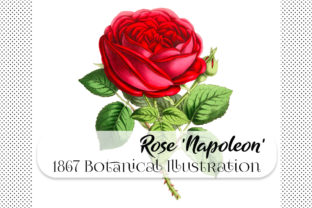
There is a distinct warmth to historical botanical art that digital generation often struggles to replicate. When designers and artists seek floral elements for their projects, they are frequently caught between sterile vector graphics and overly saturated stock photography. The Botanical Hybrid Rose Napoleon III offers a compelling middle ground. Sourced directly from an 1867 botanical floral book, this illustration captures a specific moment in horticultural history while providing the technical versatility required for contemporary creative workflows. It is not merely a picture of a flower; it is a piece of visual heritage that has been carefully restored for practical application.
The appeal of this specific hybrid rose lies in its provenance and its presentation. Originating from the mid-19th century, the Napoleon III variety represents an era when rose breeding was transitioning from purely functional cultivation to high art. Today, this colorful, copyright-free illustration serves as a bridge between that romantic past and current design needs. Whether you are crafting wedding stationery, designing textile patterns, or creating educational content about heritage gardens, understanding the nuances of this asset can significantly elevate the quality of your work.
The Authenticity of Imperfection in Digital Assets
In an age of pixel-perfect AI imagery, the human eye has begun to crave texture and history. The images reproduced from these 19th-century botanical plates possess a unique character defined by their subtle imperfections. When working with the Botanical Hybrid Rose Napoleon III, it is important to recognize that these artifacts are features, not flaws.
The original printing processes of the 1860s involved hand-coloring or early chromolithography, techniques that naturally resulted in slight variations in ink density and paper grain absorption. These fine details add a vintage authenticity that clean, modern illustrations lack. For a designer, this means the image carries built-in depth. You do not need to apply heavy noise filters or distress overlays to make it look aged; the age is intrinsic to the file. This organic texture helps ground digital layouts, preventing them from feeling too flat or synthetic. When placed against modern typography or solid color backgrounds, the rose’s historical patina creates a sophisticated contrast that draws the viewer's eye without overwhelming the composition.
Enhanced Coloration for Contemporary Visibility
While historical accuracy is valuable, usability is paramount. Original antique books often suffer from fading, yellowing foxing, or muted pigments due to decades of oxidation. A direct scan of such a plate might be historically accurate, but it often fails to pop on a backlit screen or in vibrant print media. The version of the Botanical Hybrid Rose Napoleon III discussed here addresses this limitation through careful digital restoration.
The colors in this illustration have been heightened and brightened to meet modern aesthetic standards while respecting the original artist's intent. The reds are deeper, the greens more verdant, and the subtle shading in the petals has been clarified. This enhancement ensures that the flower remains the focal point of any project. For creators, this eliminates the tedious post-processing work usually associated with using public domain antiquities. You receive a file that is visually competitive with modern assets but retains the soulful complexity of a hand-painted plate. This balance makes it particularly suitable for commercial packaging, social media graphics, and web design where visual impact drives engagement.
Technical Versatility: JPG vs. PNG Workflows
Practical utility defines whether a digital asset becomes a staple in a creator's library or a forgotten download. This resource includes both JPG and PNG formats, each serving distinct purposes in a professional workflow. Understanding when to deploy each format maximizes the value of the Botanical Hybrid Rose Napoleon III.
- PNG Format: This is likely the most valuable inclusion for composite work. The image has been meticulously cut out, removing the original book page background. This transparency allows you to drop the rose directly onto any canvas without masking or erasing edges yourself. It is ideal for layering over colored backgrounds, integrating into photo manipulations, or placing within complex UI designs. The clean edges preserve the delicate serrations of the leaves and the ruffled texture of the petals.
- JPG Format: Best suited for standalone displays or contexts where file size is a constraint. If you are using the rose as a header image, a blog feature, or a full-page print element where the background does not need to show through, the JPG provides excellent compression without sacrificing the enhanced color fidelity. It is also the preferred format for certain print-on-demand platforms that do not support transparency.
Having both options readily available streamlines production. Instead of spending twenty minutes pen-tooling a complex flower shape, you can focus on layout, typography, and overall concept development.
Applications Across Creative Industries
The versatility of the Botanical Hybrid Rose Napoleon III extends far beyond simple decoration. Its specific aesthetic qualities make it a strategic choice for several industries and project types.
Wedding and Event Stationery
The Napoleon III era is synonymous with opulence and romance, making this rose a natural fit for nuptial branding. Unlike generic clip-art roses, this illustration conveys a sense of established tradition and bespoke luxury. It works exceptionally well on save-the-dates, menu cards, and seating charts. Because the image is copyright-free, event designers can use it across multiple touchpoints—from digital invitations to printed napkins—without worrying about licensing fees or attribution requirements. The enhanced colors ensure it reproduces beautifully on both cream cardstock and glossy signage.
Textile and Surface Pattern Design
Fashion and interior designers frequently mine botanical archives for inspiration. This cut-out rose is ready to be tiled, mirrored, or scattered to create seamless repeat patterns. The vintage character of the line work translates well to fabric printing, embroidery digitizing, and wallpaper design. Because the colors have been brightened, the resulting patterns avoid looking dusty or dated, appealing to consumers who want "cottagecore" or "dark academia" aesthetics with a fresh, livable palette.
Educational and Historical Content
For bloggers, educators, and museum professionals, finding accurate, high-quality visuals for the Second French Empire period can be challenging. This illustration serves as an excellent primary source visualization. It can anchor articles about 19th-century horticulture, the symbolism of flowers in Victorian society, or the evolution of botanical illustration itself. The clarity of the enhanced image ensures that students and readers can appreciate the morphological details of the hybrid rose, which might otherwise be lost in a dim archival scan.
Navigating Copyright-Free Usage Responsibly
One of the most significant advantages of utilizing the Botanical Hybrid Rose Napoleon III is its copyright-free status. Works published in 1867 are firmly in the public domain in the United States and many other jurisdictions. This freedom removes legal friction from the creative process. However, practical considerations remain.
While the underlying artwork is free to use, the specific digital restoration and cut-out provided in this package represent a value-added product. Users should always verify the specific terms of the platform from which they acquire the file. Generally, public domain images allow for unrestricted commercial and personal use, including modification and redistribution as part of a larger design. This makes the asset safe for client work, merchandise, and digital products. For agencies and freelancers, this peace of mind is invaluable. You can deliver final files to clients without retaining ongoing royalty obligations or fearing future takedown notices.
Integrating Vintage Botany into Modern Layouts
Successfully incorporating this historic rose requires thoughtful design integration. The enhanced colors and vintage texture demand a supportive environment. Pairing the Botanical Hybrid Rose Napoleon III with appropriate typography is crucial. Serif typefaces with high stroke contrast, such as Didot or Bodoni, echo the elegance of the 1860s. Conversely, pairing it with a clean, geometric sans-serif creates a striking juxtaposition that feels intentionally modern.
Consider negative space. Botanical illustrations are often dense with detail. Allow the rose room to breathe within your layout. Crowding it with text or other graphical elements diminishes its impact. Use the natural curve of the stem and the direction of the bloom to guide the viewer’s eye toward key information, such as a headline or call-to-action button. The organic flow of the plant can serve as a visual arrow, structuring the hierarchy of the page naturally.
Finally, respect the scale. Because this image originates from a book plate, it has inherent proportions. Scaling it up significantly may reveal the limits of the original resolution or the restoration process. Always check the pixel dimensions against your intended output size. For large-format printing, consider using the PNG as a central motif surrounded by complementary vector elements or textures to maintain visual integrity at massive scales. By treating this botanical treasure with technical care and artistic respect, you ensure that the legacy of the Napoleon III rose continues to bloom in new and unexpected contexts.