Botanical Candy Striped Carnation: A Vintage 1867 Illustration for Modern Design
In the vast landscape of digital assets and creative resources, finding imagery that balances historical authenticity with modern usability can be a significant challenge. The Botanical Candy Striped Carnation stands out as a unique solution for designers, educators, and hobbyists who require high-quality floral art without the legal complexities of modern copyright. Sourced directly from an 1867 botanical floral book, this illustration offers more than just a picture of a flower; it provides a tangible connection to Victorian-era scientific artistry, refined for contemporary digital workflows.
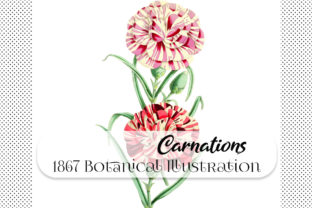
This specific resource features a colorful, copyright-free candy striped carnations illustration that has been meticulously prepared for immediate use. While the source material dates back over a century and a half, the asset has been enhanced to meet current design standards. The colors have been heightened and brightened to ensure vibrancy on digital screens and in print, while the image itself has been cleanly cut out. Available in both JPG and PNG formats, this botanical plate serves as a versatile foundation for a wide array of creative projects, from wedding stationery to educational biology materials.
The Historical Significance of 1867 Botanical Art
To truly appreciate the value of this Botanical Candy Striped Carnation, one must understand the context of its origin. The year 1867 falls within a golden age of botanical illustration. During this period, chromolithography was beginning to revolutionize how color was reproduced in books. Unlike earlier hand-colored engravings which varied wildly from copy to copy, or later photographic processes that lacked color fidelity, mid-19th-century botanical plates aimed for a perfect synthesis of scientific accuracy and artistic beauty.
Carnations, or Dianthus caryophyllus, were subjects of intense horticultural interest during the Victorian era. The "candy striped" variety depicted here represents the fascination with variegation and hybridization that defined the period's gardening culture. When utilizing this image, creators are not merely using a generic flower clip-art; they are incorporating a piece of horticultural history. The illustration captures the specific ruffled petal structure and distinctive bi-color patterning that botanists of the 1860s sought to document with precision.
Evaluating Authenticity and Digital Enhancement
A common concern when using public domain vintage art is the quality of the reproduction. Original 1867 texts often suffer from foxing (brown spots), faded ink, and paper texture degradation. This specific Botanical Candy Striped Carnation asset addresses these issues through thoughtful digital restoration. It is important to note that the restoration process described for this image prioritizes character over sterile perfection.
The images from these historical books are beautiful, and any imperfections in the fine details from the reproduced botanical plates only add to the vintage character. Rather than artificially smoothing out every grain of paper or erasing the subtle texture of the original lithographic stone, the enhancement focuses on color correction and isolation. The colors here are heightened and brightened, ensuring the pinks, whites, and greens pop against modern backgrounds, yet the soul of the antique print remains intact. This balance makes the image suitable for projects that demand a sense of heritage and warmth, distinguishing it from vector graphics that can sometimes feel cold or overly manufactured.
Practical Applications Across Industries
The utility of a pre-cut, high-resolution botanical illustration extends far beyond simple decoration. Because this Botanical Candy Striped Carnation is provided as a transparent PNG as well as a standard JPG, it integrates seamlessly into professional workflows. Below are several key areas where this asset proves particularly valuable.
- Wedding and Event Stationery: The candy-striped pattern naturally evokes nostalgia and romance. Planners and designers can use the PNG file to create layered invitations, place cards, and thank-you notes that feature dimensional floral elements without the cost of hiring a custom illustrator.
- Educational Materials: Biology teachers and textbook authors can utilize this image to teach plant morphology, specifically focusing on petal variation and historical classification methods. Being copyright-free removes barriers for open-source educational resources.
- Packaging Design: Small businesses selling artisanal soaps, candles, or teas often seek vintage aesthetics to convey natural quality. This brightened illustration works exceptionally well on product labels where legibility and visual impact are paramount.
- Digital Content Creation: Bloggers and social media managers can use the cutout as a sticker-like overlay for quotes, announcements, or seasonal posts, adding organic texture to flat digital layouts.
Technical Considerations for Integration
When incorporating this Botanical Candy Striped Carnation into your work, understanding the file specifications ensures the best possible outcome. The inclusion of both JPG and PNG formats caters to different technical needs.
- PNG Usage: Utilize the PNG version when you need the flower to float over a colored background, photograph, or textured paper. The clean cutout eliminates the need for manual masking in Photoshop or Canva, saving hours of production time. This format is ideal for composite designs where the flower interacts with typography or other graphical elements.
- JPG Usage: The JPG format is best suited for archival purposes, mood boards, or instances where a rectangular frame is desired. If you intend to print the image at a large scale, verify the DPI (dots per inch) of the JPG to ensure the heightened colors do not appear pixelated. Vintage illustrations generally scale well due to their original line-work density, but checking resolution is always a prudent step.
- Color Management: Since the colors have been digitally brightened, they may appear more saturated than a physical 1867 print. For professional printing, consider converting the RGB color profile to CMYK and performing a soft proof to ensure the vibrant candy stripes reproduce accurately on your chosen paper stock.
Navigating Copyright and Commercial Use
One of the most significant advantages of this Botanical Candy Striped Carnation is its copyright-free status. In an era of aggressive intellectual property enforcement, having a verified public domain asset provides peace of mind for commercial users. Works published in 1867 are firmly in the public domain in the United States and most international jurisdictions. This means you can use the image for merchandise, branding, and monetized content without paying royalties or seeking permission.
However, users should exercise due diligence. While the underlying artwork is free, specific digital restorations can sometimes carry new copyrights if they involve significant creative transformation. This particular asset is presented as a faithful reproduction with color enhancement and isolation, which typically does not meet the threshold for new copyright protection in many regions. Nevertheless, for large-scale commercial enterprises, maintaining documentation of the source (the 1867 botanical book) is a best practice to demonstrate good faith and provenance.
Strengths and Limitations of Vintage Botanical Assets
While this illustration is a powerful tool, it is essential to manage expectations regarding its application. Understanding both the strengths and limitations helps creators decide if this specific Botanical Candy Striped Carnation aligns with their project goals.
Strengths:
- Aesthetic Depth: The hand-drawn nature of the original lithograph provides organic lines that AI-generated flowers often fail to replicate convincingly.
- Ready-to-Use: The pre-isolated background removes the most tedious aspect of using vintage scans.
- Versatility: The brightened color palette bridges the gap between antique charm and modern visibility requirements.
Considerations:
- Style Specificity: This is distinctly Victorian. It may clash with ultra-minimalist, futuristic, or corporate tech aesthetics unless used ironically or as a deliberate juxtaposition.
- Resolution Limits: As a scan from a 19th-century book, there is a finite amount of detail. Extreme zooming may reveal the paper grain or printing dots, which adds character for some but may be undesirable for others requiring crisp, infinite scalability.
- Color Accuracy: The "heightened" colors are an interpretation. If botanical scientific accuracy regarding exact pigment shades is required for a research paper, consult the original unedited plate rather than this enhanced version.
Final Thoughts on Creative Implementation
The Botanical Candy Striped Carnation from 1867 represents a successful marriage of historical preservation and modern design utility. By taking a beautiful, imperfect artifact from a 19th-century floral book and preparing it with brightened colors and a clean cutout, this resource empowers creators to infuse their work with timeless elegance. Whether you are designing a wedding suite, teaching a botany class, or branding an artisanal product, this copyright-free illustration offers a reliable, aesthetically rich, and legally safe foundation.
Ultimately, the value of such assets lies in their ability to tell a story. When you drop this candy-striped carnation into your layout, you are not just adding a decorative element; you are continuing a visual tradition that has celebrated the intricate beauty of nature for over 150 years. With both JPG and PNG formats included, the barrier to entry is low, allowing both seasoned professionals and enthusiastic beginners to explore the enduring appeal of vintage botanical art in their own unique ways.