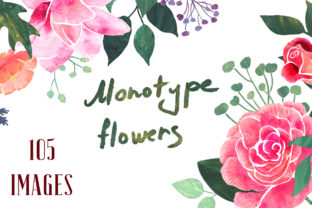
Monotype Flowers: Evaluating Digital Assets for Floral Design
The intersection of traditional printmaking aesthetics and modern digital utility defines the current demand for organic textures in graphic design. Monotype Flowers represents a specific category of digital assets that captures the spontaneous, painterly quality of monotype printing while offering the technical precision required for contemporary workflows. For designers, illustrators, and content creators evaluating floral resources, understanding the distinct characteristics of this collection is essential for determining its fit within a broader asset library. This evaluation explores the composition, practical applications, and strategic considerations of utilizing monotype-style floral elements.
Defining the Monotype Aesthetic in Digital Form
To properly evaluate Monotype Flowers, one must first understand the source technique. Traditional monotyping involves creating a unique impression by painting or drawing on a smooth plate and transferring the image to paper. The result is characterized by soft edges, variable ink density, and an inherent unpredictability that differs significantly from vector art or standard photography. When translated into a digital asset pack, these qualities provide a tactile warmth that is often missing in clean, scalable graphics.
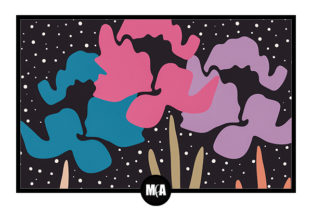
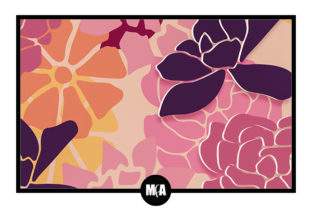
This specific collection digitizes that analog feel through high-resolution raster files. Unlike vector flowers which offer infinite scalability but often lack texture, these PNG assets retain the grain and bleed of ink on paper. The aesthetic is distinctly seasonal, evoking spring and summer through loose compositions and organic lines. For users researching floral assets, the primary value proposition here is authenticity; the assets do not look generated or perfectly symmetrical, making them suitable for projects requiring a handcrafted, artisanal appearance.
Asset Composition and Technical Specifications
A critical factor in selecting any digital resource is the balance between variety and usability. This set provides a comprehensive ecosystem of floral elements rather than isolated images. Evaluating the inventory reveals a structure designed for modular design work:
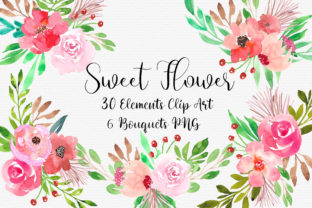
- 30 PNG Floral Arrangements (300 DPI): These serve as primary focal points. The 300 DPI resolution ensures they remain crisp in print layouts up to standard page sizes without pixelation.
- 30 PNG Floral Corners (300 DPI): Essential for framing content, borders, and certificate designs. Corner pieces are notoriously difficult to create manually with consistent lighting and style.
- 12 PNG Monotype Flowers & 19 PNG Monotype Plants: Individual elements allow for custom composition building. Having separate plants and flowers enables designers to adjust scale and hierarchy independently.
- 24 PNG Greeting Cards and Frames: Pre-structured layouts that reduce production time for stationery and social media templates.
- 5 PNG Lines of Flowers: Linear elements useful for dividers, headers, and footers where full arrangements would be visually overwhelming.
- 10 PNG Patterns: Seamless backgrounds that extend the utility of the pack beyond standalone illustrations to surface design and packaging.
All assets are delivered in PNG format with transparency. This is a non-negotiable specification for professional layering. The 300 DPI standard indicates suitability for both high-quality print and high-resolution digital displays, though users should note that extreme enlargement beyond original dimensions will reveal raster limitations.
Strategic Benefits and Practical Applications
The decision to acquire Monotype Flowers typically stems from a need to bridge the gap between efficiency and artistic expression. The primary benefit is workflow acceleration. Creating authentic monotype textures from scratch requires physical materials, scanning equipment, and significant post-processing time. This collection compresses that timeline into immediate drag-and-drop functionality.
For branding projects, particularly in wellness, beauty, botanical, or artisanal food sectors, these assets communicate values of naturalness and care more effectively than geometric vectors. The seamless patterns and frames are particularly valuable for product packaging and label design, where maintaining a consistent visual theme across multiple SKUs is necessary. Additionally, the greeting card and frame components make this set highly relevant for Print-on-Demand (POD) sellers looking to expand their seasonal catalogs without commissioning original artwork for every listing.
Tradeoffs and Limitations
Objective evaluation requires acknowledging where this asset type falls short. Because these are rasterized PNGs, they lack the mathematical flexibility of SVG or AI files. Designers cannot alter the color paths directly or resize indefinitely without quality loss. While 300 DPI is sufficient for most applications, large-format signage or billboard advertising may require upsampling or alternative vector sources.
Furthermore, the stylistic specificity of monotype art is a double-edged sword. It is excellent for organic, romantic, or vintage themes but may clash with corporate, tech-forward, or minimalist brutalist aesthetics. Users must assess whether the textured, imperfect nature of monotype aligns with their brand identity. If a project demands clinical precision or flat color fields, this collection may introduce unnecessary visual noise.
Licensing is another consideration. Buyers must verify whether the terms allow for commercial use, modification, or resale as part of derivative works. Asset packs vary widely in permissions; some restrict use to personal projects or prohibit incorporating elements into new products for sale. Always review the specific license agreement before integrating these assets into client work or commercial merchandise.
Comparative Analysis: Monotype vs. Alternatives
When comparing Monotype Flowers to other floral asset categories, distinct use cases emerge. Vector floral packs are superior for logos and responsive web design due to their scalability and small file size. However, vectors often require additional texturing to achieve the same emotional resonance as monotypes. Watercolor scans are the closest competitor; while watercolors offer similar organic qualities, monotypes tend to have higher contrast and more defined edges, making them easier to isolate against complex backgrounds.
AI-generated florals represent a newer alternative. While AI can mimic the monotype style, it often struggles with consistency across a set. A curated human-made collection like Monotype Flowers guarantees a unified color palette, stroke weight, and artistic voice that generative models currently find difficult to maintain over dozens of variations. For professionals needing reliable, cohesive assets, the curated set offers predictability that AI cannot yet match.
Decision-Making Framework
Determining whether Monotype Flowers aligns with your goals involves three key questions. First, does the project require tactile texture to convey authenticity? Second, is the output primarily print or high-res digital where 300 DPI suffices? Third, does the time saved by using pre-made corners, frames, and patterns justify the cost versus creating custom assets?
If the answer to these is affirmative, this collection serves as a robust foundational toolkit. It is best viewed not as a replacement for original illustration, but as a force multiplier that handles repetitive structural elements—borders, backgrounds, accents—freeing creative energy for bespoke typography and layout decisions. By understanding both the expressive capabilities and technical boundaries of these monotype assets, designers can integrate them effectively to enhance seasonal campaigns, stationery suites, and digital content with genuine artistic character.