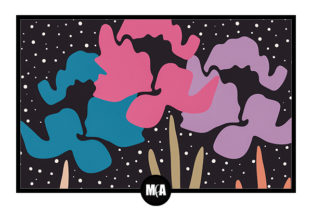
Abstract Flowers 4: Evaluating High-Resolution Floral Assets for Design
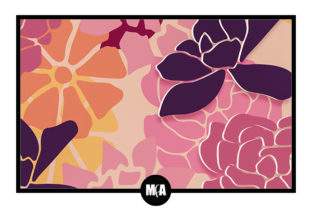
When sourcing visual assets for digital or print projects, designers often navigate a balance between aesthetic appeal and technical utility. Abstract Flowers 4 represents a specific category of stock imagery that merges organic floral motifs with non-representational artistic techniques. This collection consists of a set of three abstract floral backgrounds packaged as high-resolution JPEGs. Understanding the specific attributes, intended use cases, and limitations of this asset pack is essential for determining whether it aligns with current project requirements. This evaluation focuses on the practical application of these files in professional and creative workflows.
Defining the Asset Specifications
Before assessing aesthetic value, it is necessary to understand the technical parameters of Abstract Flowers 4. The collection is delivered as a ZIP file containing three XL JPEG images. Each file measures 3000 x 2400 pixels at 300 DPI in RGB color mode. These specifications dictate where and how the images can be effectively utilized.
- Dimensions: The 3000 x 2400 resolution provides a landscape aspect ratio of 5:4. This format is distinct from standard 16:9 widescreen ratios or 4:3 traditional formats, making it specifically suited for certain display types and print sizes.
- Resolution Density: At 300 DPI, these files are optimized for high-quality print reproduction up to approximately 10 x 8 inches without interpolation. For digital screens, this pixel density ensures crisp rendering on high-DPI monitors and mobile devices.
- Color Profile: The RGB color space indicates these files are natively designed for screen-based media. While they can be converted for print, users should anticipate potential color shifts when moving from emissive light (screens) to reflective ink (paper).
- File Format: JPEG is a lossy compression format. While efficient for storage and web use, it lacks the layer data and lossless quality of TIFF or PSD files. This impacts post-production flexibility.
Aesthetic Utility and Design Applications
The primary value proposition of Abstract Flowers 4 lies in its versatility as a background element. Unlike photographic florals that demand attention as a focal point, abstract interpretations serve as textural foundations. The stylized nature of these backgrounds allows them to support foreground content without competing for visual hierarchy.
Designers frequently utilize this type of imagery for website hero sections, presentation slides, and social media templates. The abstract quality provides visual interest and emotional tone while maintaining sufficient negative space or low-contrast areas for typography. Because the set includes three variations, it offers enough variety to create a cohesive visual theme across multiple pages or platforms without appearing repetitive. This consistency is particularly valuable for branding projects where visual continuity supports identity recognition.
Situations Where This Collection Is a Strong Fit
Evaluating the strengths of Abstract Flowers 4 reveals several scenarios where it outperforms generic alternatives. The collection is particularly effective when the design goal involves softening a corporate layout, adding organic warmth to a minimalist interface, or creating mood boards that require texture rather than literal representation.
The 5:4 aspect ratio makes these files exceptionally well-suited for tablet wallpapers, portrait-oriented digital signage, and specific print collateral like book covers or album art. Furthermore, because the images are high-resolution RGB, they bridge the gap between digital-first design and small-format print needs. If a project requires a unified look across an iPad app and a corresponding printed brochure, these files provide adequate fidelity for both mediums without requiring separate asset purchases.
Tradeoffs and Technical Considerations
Objective evaluation requires acknowledging limitations. Users considering Abstract Flowers 4 must weigh specific tradeoffs against their project needs. The most significant constraint is the file format. As flattened JPEGs, these images do not offer editable layers. Designers cannot easily isolate specific floral elements, adjust individual color channels non-destructively, or remove backgrounds without advanced masking techniques. If a project requires compositing individual flowers into a new arrangement, vector packs or layered PSDs would be superior choices.
Additionally, the RGB color profile presents a consideration for commercial print work. While 300 DPI is sufficient for resolution, the color gamut may exceed what standard CMYK printers can reproduce. Professionals preparing files for offset printing will need to perform soft-proofing and manual color correction to avoid muddy greens or oversaturated magentas common in floral RGB-to-CMYK conversions.
Finally, the fixed aspect ratio of 3000 x 2400 may require cropping for modern ultra-wide monitors or vertical mobile stories. While the resolution allows for some cropping, aggressive resizing to fit 16:9 or 9:16 formats will result in significant loss of composition or detail. Users should verify that the central focal points of the abstract designs remain intact after necessary cropping for their specific target devices.
Comparing Alternatives and Decision Criteria
Determining whether Abstract Flowers 4 is the correct investment involves comparing it against available alternatives. The decision matrix should prioritize the end-use medium and the required level of customization.
If the primary requirement is large-format printing such as billboards or wall murals, this collection may be insufficient. In such cases, vector-based floral patterns or RAW photography files with higher native resolutions would be more appropriate. Conversely, if the project is strictly web-based and load speed is paramount, these XL JPEGs might be unnecessarily heavy. Web-optimized assets or CSS-generated gradients could achieve similar aesthetic results with better performance metrics.
For users seeking exact color matching or brand-specific palettes, pre-made abstract JPEGs present a challenge. Generative AI tools or custom illustration commissions allow for precise color control that static stock images cannot offer. However, for general-purpose design where exact color matching is secondary to overall mood and texture, Abstract Flowers 4 offers a time-efficient solution that eliminates the learning curve associated with generative tools or the cost of custom artwork.
Practical Insights for Implementation
For those who determine that this collection aligns with their goals, maximizing value requires strategic implementation. Users should treat these files as starting points rather than final solutions. Applying subtle overlay gradients can improve text readability without obscuring the abstract floral texture. Utilizing blend modes in design software can help integrate the RGB colors more naturally into mixed-media layouts.
It is also advisable to archive the original ZIP files and work only on copies. Since JPEG artifacts can accumulate with repeated editing and saving, preserving the pristine source files ensures long-term usability. When converting for print, utilizing professional ICC profiles rather than automated conversion tools will yield superior color accuracy for the floral tones.
Ultimately, Abstract Flowers 4 serves a specific niche within the broader ecosystem of design assets. It is best evaluated not as a standalone masterpiece, but as a functional component in a larger creative workflow. By understanding its technical boundaries and aesthetic strengths, designers can make informed decisions about its suitability for wallpapers, digital backgrounds, and creative projects. The collection offers a pragmatic balance of quality and convenience for users whose requirements match its specific resolution, format, and stylistic characteristics.