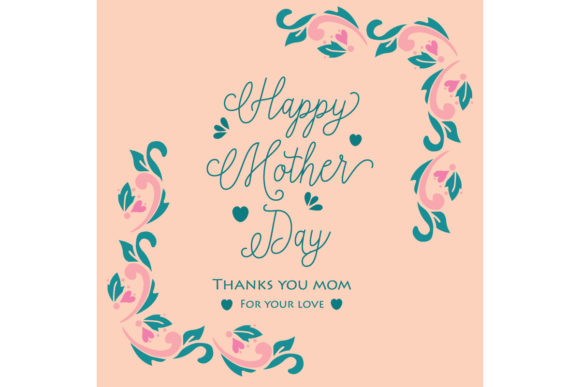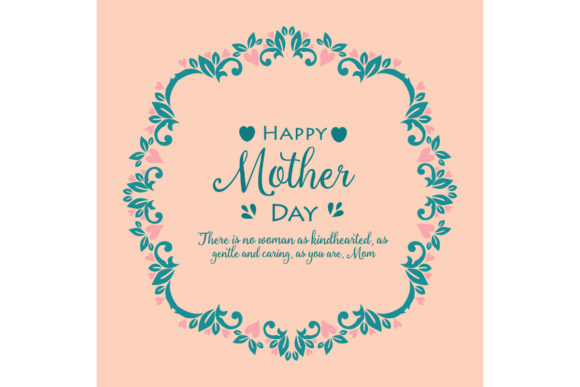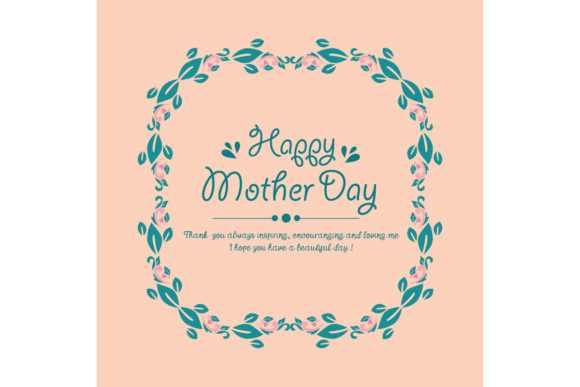
Cute Happy Mother Day Card Design: Integrating Vector Floral Frames into Creative Workflows
In the realm of digital design and print production, a Cute Happy Mother Day Card Design serves as more than just a seasonal greeting; it functions as a critical asset within broader marketing campaigns, client relationship management strategies, and personal creative portfolios. For professionals ranging from freelance illustrators to small business owners, the specific aesthetic of a seamless and unique leaf and floral frame provides a versatile foundation that balances emotional resonance with technical precision. Understanding how to leverage this vector illustration style effectively requires moving beyond simple decoration and viewing the design as a modular component within a larger operational workflow.
The integration of cute, stylized botanical elements into Mother’s Day collateral addresses a specific market need for warmth and approachability without sacrificing professional polish. When executed correctly, these designs streamline the production process, allowing for rapid iteration across multiple formats while maintaining brand consistency. Whether you are preparing a direct mail campaign, updating an e-commerce storefront, or creating digital assets for social media engagement, the structural integrity of a vector-based floral frame ensures that your output remains crisp, scalable, and adaptable to various aspect ratios and print specifications.
Strategic Planning and Asset Preparation
Before opening any design software, successful implementation of a Cute Happy Mother Day Card Design begins with strategic planning. The "cute" aesthetic is deceptively complex; it requires a deliberate balance of color theory, line weight, and negative space to ensure the final product appeals to the target demographic without appearing juvenile. During the pre-production phase, creators must define the technical parameters that will govern the asset's lifecycle.
For marketers and entrepreneurs, this stage involves aligning the visual tone with existing brand guidelines. If your brand typically utilizes minimalist corporate aesthetics, introducing a lush floral frame requires careful calibration. You might opt for a monochromatic palette or reduced line complexity to bridge the gap between festive and professional. Conversely, lifestyle brands and educators may embrace saturated pastels and intricate details. Establishing these constraints early prevents scope creep and ensures the vector illustration serves its intended purpose within the larger communication strategy.
Technical preparation also dictates file organization. A seamless leaf and floral frame should be constructed as a master symbol or smart object. This non-destructive workflow allows designers to adjust the scale, rotation, and coloration of individual botanical elements globally. By treating the frame as a parametric system rather than a static image, you create a reusable asset library that significantly reduces turnaround time for future seasonal projects or variations of the current campaign.
Execution: Leveraging Vector Illustrations for Versatility
The core advantage of utilizing vector illustrations for Mother’s Day cards lies in their infinite scalability and editability. Unlike raster images, which degrade when resized, vector paths maintain perfect fidelity whether printed on a 2x3 inch note card or scaled up for a retail window display. This technical characteristic directly influences production efficiency and cost-effectiveness.
During the execution phase, focus on constructing the seamless frame with modularity in mind. Rather than drawing a continuous, unbroken border, build the design using discrete clusters of leaves, buds, and flowers. This approach offers several practical benefits:
- Adaptive Layouts: Discrete elements can be rearranged to fit portrait, landscape, or square formats without distorting the artwork.
- Text Integration: Modular frames allow for easy adjustment of negative space, ensuring typography remains legible and balanced against the decorative border.
- Color Variations: Separating foliage from blooms enables quick recoloring to match different product lines or recipient demographics.
- Animation Potential: Individual vector layers can be exported separately for motion graphics, adding value to digital marketing efforts.
When designing the "cute" factor, pay close attention to stroke consistency and corner radius. Soft, rounded terminals and uniform line weights contribute to the friendly, approachable vibe essential for this genre. However, maintain strict adherence to grid systems and alignment tools. Even whimsical designs require underlying structural discipline to look professional. This duality—organic appearance backed by geometric precision—is what separates high-quality commercial assets from amateur crafts.
Integration Across Platforms and Media
A well-executed Cute Happy Mother Day Card Design rarely exists in isolation. Its true value emerges through integration across multiple touchpoints. For small business owners and publishers, the vector frame acts as a visual anchor that creates cohesion across disparate media channels.
In print workflows, ensure your vector files are set up with appropriate bleed and safe zones. The seamless nature of the frame simplifies edge-to-edge printing, but verification is crucial. Export press-ready PDFs with embedded fonts and outlined strokes to prevent rendering issues at the print shop. Simultaneously, generate RGB versions optimized for web use. Because the source is vector, you can export SVG files for websites, ensuring fast load times and sharp rendering on high-DPI screens, or PNGs with transparency for email newsletters and social media overlays.
For content creators and bloggers, the floral frame can serve as a recurring visual motif throughout the Mother’s Day season. Use cropped sections of the frame as dividers in long-form articles, as borders for featured images, or as backgrounds for quote graphics. This repetition builds visual recognition and maximizes the ROI of the initial design effort. Educators and coaches might adapt the same asset for worksheet headers, certificate borders, or presentation slides, demonstrating how a single creative decision can permeate an entire ecosystem of deliverables.
Quality Control and Usability Testing
Efficiency should never compromise quality. Before finalizing any Cute Happy Mother Day Card Design, implement a rigorous quality control checklist. Vector illustrations can sometimes harbor hidden issues that only become apparent during output. Check for open paths, overlapping anchors, and unintended clipping masks that could cause printing errors or display glitches.
Usability testing extends beyond technical verification. Evaluate the design’s functional performance in context. Does the frame compete with the headline text? Is the contrast sufficient for accessibility standards? Does the "cute" aesthetic translate appropriately across cultural contexts if your audience is global? Gathering feedback from colleagues or conducting A/B tests on digital variants can reveal friction points before full deployment.
Consider the end-user experience as well. If you are selling or distributing these templates, ensure they are user-friendly for non-designers. Provide organized layer structures, clear labeling, and documentation on how to modify colors and text. A template that is technically flawless but difficult to edit fails its primary purpose. Prioritizing usability ensures your assets deliver value long after the initial creation phase.
Long-Term Asset Management and Repurposing
Sustainable creative workflows depend on effective asset management. After the Mother’s Day campaign concludes, archive your vector illustrations systematically. Tag files with descriptive metadata including style descriptors (e.g., "botanical," "seamless," "pastel"), technical specs, and usage rights. This organization transforms a seasonal project into a permanent resource.
The versatility of a leaf and floral frame extends far beyond May. With minor color adjustments, the same base design can transition into spring promotions, wedding stationery, or wellness content. Stripping away specific holiday text converts the asset into a generic decorative border suitable for year-round use. Entrepreneurs and freelancers can bundle these repurposed vectors into digital product offerings, creating passive revenue streams from work already completed.
Furthermore, analyzing the performance of your Cute Happy Mother Day Card Design informs future creative decisions. Track metrics such as engagement rates, sales conversions, or client feedback specifically tied to this visual style. Did the softer aesthetic outperform previous minimalist approaches? Which color palettes resonated most? Documenting these insights creates a knowledge base that refines your planning process for subsequent seasons. Over time, this iterative approach cultivates a distinctive visual language that audiences recognize and trust.
Collaborative Considerations and Handoffs
In team environments, clear communication regarding vector assets prevents bottlenecks. When handing off a Cute Happy Mother Day Card Design to copywriters, developers, or print vendors, provide comprehensive specifications. Include style guides that define acceptable color modifications, minimum size requirements, and prohibited alterations. This documentation preserves design integrity even when the original creator is not directly involved in every iteration.
For agencies managing multiple clients, establish standardized naming conventions and folder structures for seasonal assets. Consistency in file organization reduces search time and minimizes version control errors. When collaborating with external partners, ensure licensing terms are clearly understood. Vector illustrations purchased from stock sites often have restrictions on resale or modification; creating original seamless frames eliminates these legal ambiguities and grants full ownership of the intellectual property.
Ultimately, treating cute Mother’s Day card design as a systematic process rather than a one-off artistic endeavor elevates both the quality of the output and the efficiency of the workflow. By focusing on modularity, cross-platform integration, and long-term usability, professionals can transform seasonal creativity into sustainable business value. The result is not merely a beautiful greeting card, but a robust asset that supports broader organizational goals and enhances operational resilience.