Watercolor Woodland Animals Set for Rustic Design
Creating authentic rustic aesthetics requires more than just applying a sepia filter or selecting a vintage typeface. True woodland charm comes from organic textures, hand-painted details, and illustrations that feel alive rather than manufactured. The Watercolor Woodland Animals Set provides this specific tactile quality through a comprehensive collection of forest elements designed for professional and personal projects alike. Unlike generic clip art, these assets possess the subtle color bleeding and brushstroke variations characteristic of traditional watercolor painting, making them ideal for designers seeking warmth and personality in their visual communications.
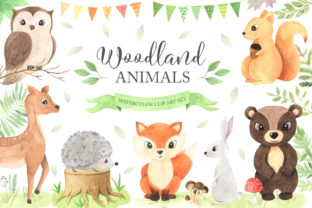
This collection centers on eight distinct creatures: a fox, bear, deer, owl, hedgehog, rabbit, squirrel, and additional forest friends. Each animal is rendered with soft edges and naturalistic coloring that avoids the sterile look of vector graphics. Surrounding these characters are 72 botanical and arboreal elements, including leaves, branches, flowers, herbs, mushrooms, and 14 evergreen trees. This depth of content allows creators to build complete scenes rather than relying on isolated focal points. When paired with appropriate typography—such as a textured serif font for headlines or a clean sans serif for body copy—these illustrations establish a cohesive brand identity that feels both nostalgic and contemporary.
Technical Specifications for Professional Workflows
For designers and publishers, resolution and file format dictate usability. Nothing disrupts a creative workflow faster than discovering an asset pixelates at print size. The individual elements in this set address this concern with high-resolution 300dpi PNG files featuring transparent backgrounds. Dimensions range from approximately 1000x1300px up to 1600x3000px, providing ample flexibility for everything from small stationery accents to large-format nursery decor. The transparency ensures seamless integration over colored backdrops or textured papers without awkward white boxes breaking the composition.
The seamless patterns and round frames deserve special attention for textile and surface design applications. Saved at 5000x5000px in both JPG and PNG formats, these tiles support extensive scaling for fabric printing, wallpaper, or digital backgrounds. Having both formats available is practical; use the JPG for solid background fills where file size matters, and switch to the PNG when you need to layer the pattern beneath other elements while maintaining transparency. This versatility supports diverse outputs, from baby shirt designs to packaging wraps, without requiring multiple purchases or manual tiling adjustments.
Elevating Nursery and Stationery Projects
Nursery design demands a delicate balance between whimsy and sophistication. Parents often seek themes that will age gracefully beyond infancy, which is why rustic woodland motifs remain perennially popular. The included Family Tree poster template (2480x3508px) serves as an excellent foundation for this market segment. Pre-formatted as a ready-to-print JPG, it eliminates layout guesswork while leaving space for customization. Designers can overlay names using complementary handwritten fonts or modern calligraphy to create personalized heirloom pieces.
Beyond wall art, these assets excel in stationery and announcement design. Birth announcements, party invitations, and greeting cards benefit from the emotional resonance of hand-painted imagery. A watercolor fox peeking from behind a floral wreath creates immediate visual interest and guides the viewer’s eye toward key information. When designing these pieces, consider negative space carefully. The organic shapes of branches and leaves naturally frame text areas, but overcrowding can reduce readability. Test your layouts at actual print size to ensure typographic hierarchy remains clear against the illustrated backdrop.
Strategic Applications Across Media
While nurseries represent a primary use case, the Watercolor Woodland Animals Set extends well into commercial branding and digital content. Small businesses in eco-friendly products, outdoor gear, children’s apparel, and artisanal foods can leverage these illustrations to communicate values of nature, craftsmanship, and authenticity. For logo design, individual animals work as distinctive mascots or secondary marks alongside wordmarks. Pair a detailed watercolor bear with a minimalist geometric typeface to create contrast between organic illustration and structured typography—a technique that signals both tradition and reliability.
Digital creators face unique challenges with raster artwork. Social media graphics and blog headers require crisp rendering across various screen densities. The larger element sizes accommodate retina displays without degradation, while the seamless patterns provide consistent branding across Instagram stories, Pinterest pins, and website backgrounds. Content marketers promoting autumn campaigns, harvest festivals, or sustainability initiatives will find the seasonal palette particularly relevant. Rather than treating these as mere decoration, integrate them into visual storytelling that reinforces messaging about connection, growth, or natural cycles.
Practical Guidance for Asset Integration
Maximizing this collection requires thoughtful pairing decisions. Watercolor illustrations carry significant visual weight due to their texture and color variation. Balance them with typography that doesn’t compete for attention. Avoid overly ornate script fonts that mimic the hand-painted aesthetic too closely; instead, opt for clean serifs or understated sans serifs that provide breathing room. If your project demands multiple typefaces, limit yourself to two families maximum to maintain professionalism. Test combinations at various sizes before finalizing, ensuring legibility isn’t compromised by busy illustrative backgrounds.
Color management also warrants consideration. While the pre-painted palette works beautifully out of the box, some projects may require tonal adjustments to match existing brand guidelines. Because these are raster images rather than vectors, recoloring requires careful masking and adjustment layers in Photoshop or similar software. Plan color edits early in the process to avoid last-minute surprises. Additionally, verify licensing terms for your intended use. Commercial applications like product packaging or client work typically require appropriate licenses, so confirm permissions before incorporating assets into revenue-generating projects.
Finally, organize your asset library systematically. With over 80 individual files plus patterns and templates, efficient file management saves hours during production. Create categorized folders separating animals, botanicals, patterns, and templates. Rename files descriptively if default naming conventions aren’t intuitive. Consider creating mood boards or sample compositions before starting major projects to visualize how elements interact. This preparatory work prevents scope creep and ensures the Watercolor Woodland Animals Set enhances rather than overwhelms your creative vision. Whether crafting intimate nursery art or developing scalable brand identities, approaching these resources with intention yields results that resonate authentically with audiences seeking genuine handmade aesthetics in an increasingly digital landscape.